

Postpartum Depression Signs at 1 Week, 1 Month, and 6 Months: How Do They Differ? | Safe and Sound
Many people still think postpartum depression only occurs immediately after giving birth, with clear symptoms such as excessive crying or unwillingness to care for the baby. Some mothers go through the initial phase quite well, then begin to feel exhausted and empty around the third or fourth month. Others may go six months, even almost a year, after giving birth, silently enduring it without ever considering it depression.
Understanding how the signs of postpartum depression change at each stage is important, not only so that mothers can recognize their condition earlier, but also so that those around them can provide more appropriate support.
What is postpartum depression and why do its symptoms change over time?
Postpartum depression is a mental health condition that can occur within the first year after giving birth. It's not a sign of weakness or a lack of love for the child, but rather the result of many factors affecting the mother's body and mind in a very short period.
After childbirth, estrogen and progesterone levels in the body drop sharply and suddenly. Combined with prolonged sleep deprivation, the pressure of caring for a baby who is completely dependent on her, and major changes in role, identity, and relationships, mothers are facing more challenges simultaneously than at any other stage of their lives.
The reason the signs change over time is because the body and mind are reacting to different pressures at each stage. The first week is the physical and emotional shock immediately after birth. The first month is when fatigue accumulates and the realities of motherhood begin to become apparent. After six months, the burden doesn't disappear but may have become more deeply ingrained, but because life outside has returned to "normal," mothers are more likely to blame themselves instead of realizing they need support.
>> See also: Discover 5 misconceptions about postpartum depression with a psychologist
Signs of postpartum depression at different stages
Not all mothers experience postpartum depression in the same way. This difference is not random but stems from the fact that mothers' bodies and minds are reacting to very different pressures at each stage.
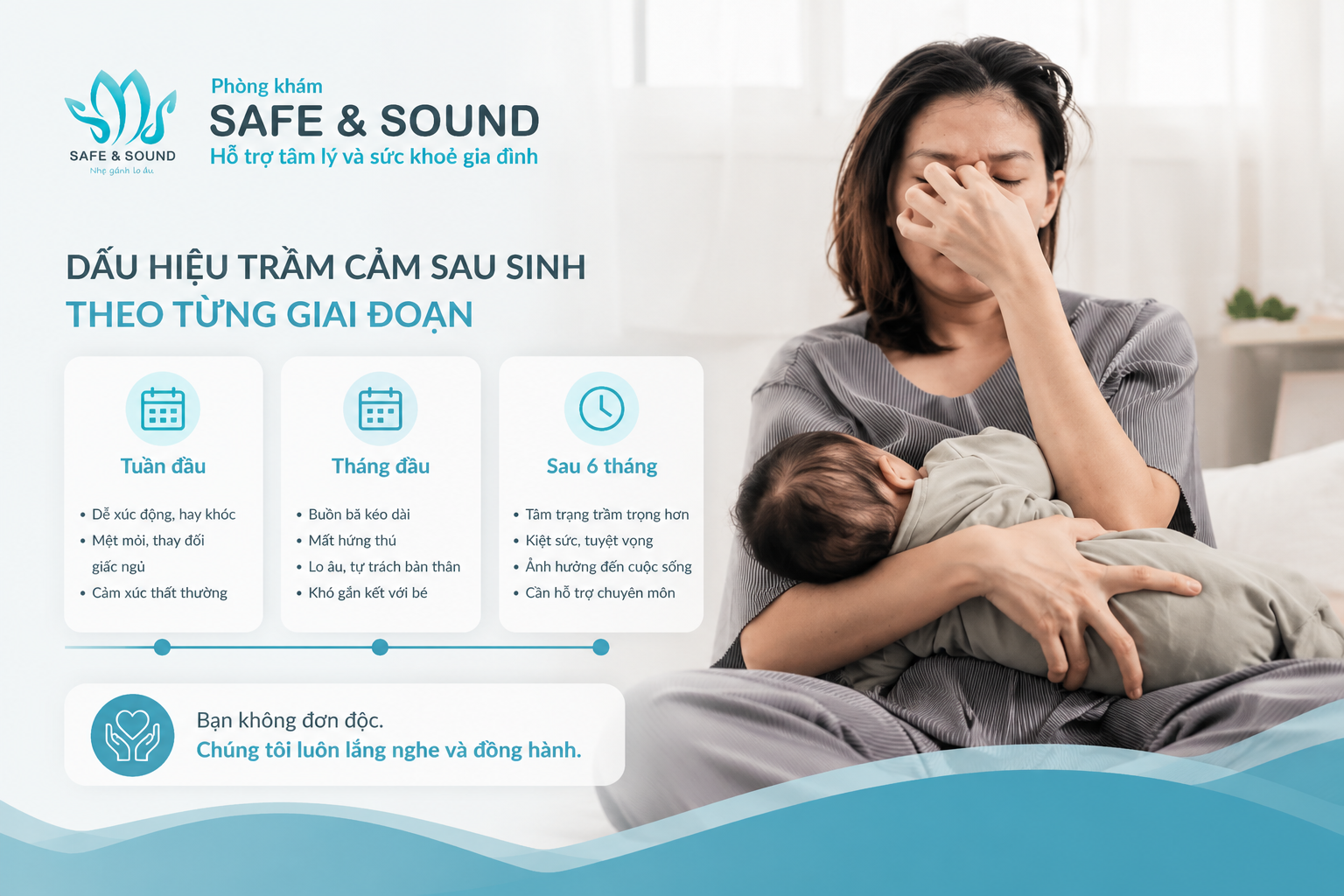
Understanding this will help you avoid missing signs simply because they don't match what you've heard or read about postpartum depression.
The first week after birth: Baby blues or true postpartum depression?
Within the first few days to about two weeks after giving birth, many mothers experience emotional instability, medically known as "baby blues." This is a common phenomenon, affecting approximately 50–80% of postpartum women, and usually resolves on its own after 1–2 weeks as hormones gradually stabilize.
Common symptoms during this phase include crying easily for no apparent reason, feeling restless or anxious, rapid mood swings, and feeling overwhelmed by everything. This isn't depression yet, but it can become a precursor to depression if left untreated.
A sign to pay more attention to in the first week is when emotions not only fluctuate but also become very negative and persistent. Specifically, this includes a complete emotional numbness, a lack of connection with the baby despite efforts, thoughts of self-harm or fear of harming the baby, or a feeling of not existing. These signs are not typical baby blues and need to be evaluated by a professional as soon as possible.
The first month after childbirth: When emotions don't improve on their own.
While baby blues usually resolve on their own after two weeks, true postpartum depression typically begins to manifest more clearly from around the second to third week after childbirth, sometimes later.
At this stage, mothers are usually no longer experiencing the acute emotional crisis of the early days but instead begin to feel heavier, more persistent, and harder-to-explain emotions. Some characteristic signs of this stage include:
- Emotionally and mentally: Persistent sadness or emptiness even when nothing is happening. Feelings of being a bad mother, inadequate, or unworthy of being a mother. Excessive worry about the child's health, sometimes to the point of being unable to sleep even when the child is sleeping soundly. Difficulty concentrating, forgetfulness, and difficulty making decisions, even small ones.
- Physical symptoms: Exhaustion in a way different from typical sleep-deprived fatigue, feeling like you have no energy left even after resting. Loss of appetite or irregular eating habits. Headaches and unexplained body aches.
- Behavioral traits include: Withdrawing from relationships and not wanting to see anyone, including family members. Losing interest in things once enjoyed. Recurring negative thoughts about oneself or the future may also occur.
A key difference compared to baby blues is that these feelings don't lessen over time; on the contrary, they tend to increasingly affect one's ability to function and care for oneself.
After 6 months: The most often overlooked signs
This is the stage where postpartum depression is most easily overlooked, both by the mother and those around her. The reason is that, on the surface, everything seems to be settling down. The baby is older, may have started eating solids, and sleeps more regularly. The mother is more accustomed to her new role and may have returned to work. But internally, a cycle of exhaustion and emptiness may have been silently building for months.
The signs during this stage are often more subtle and easily misinterpreted as "just stress" or "normal for having a young child":
The mother still completes her work, still takes care of her children, and still goes to work, but always feels like she's operating with her last ounce of strength. She no longer feels joy or satisfaction with anything, even the meaningful moments with her children. She feels detached, as if she's observing her own life from the outside. She easily becomes irritable or impatient, then blames herself for it. And especially, she feels lonely despite being surrounded by people, feeling like no one truly understands what she's going through.
If these feelings have lasted for weeks or months, it's not a sign that the mother isn't trying hard enough. It's a sign that needs to be listened to and properly evaluated.
Why do many mothers not realize they are experiencing depression?
Many new mothers don't realize they're experiencing postpartum depression because changes in emotions, sleep, energy, and mood are often seen as "normal when you have a baby." With all their attention focused on the baby, mothers easily overlook feelings of exhaustion, sadness, emptiness, or disconnection from themselves. This silent approach sometimes leads to postpartum depression being detected late, after the mother has endured it for too long alone.
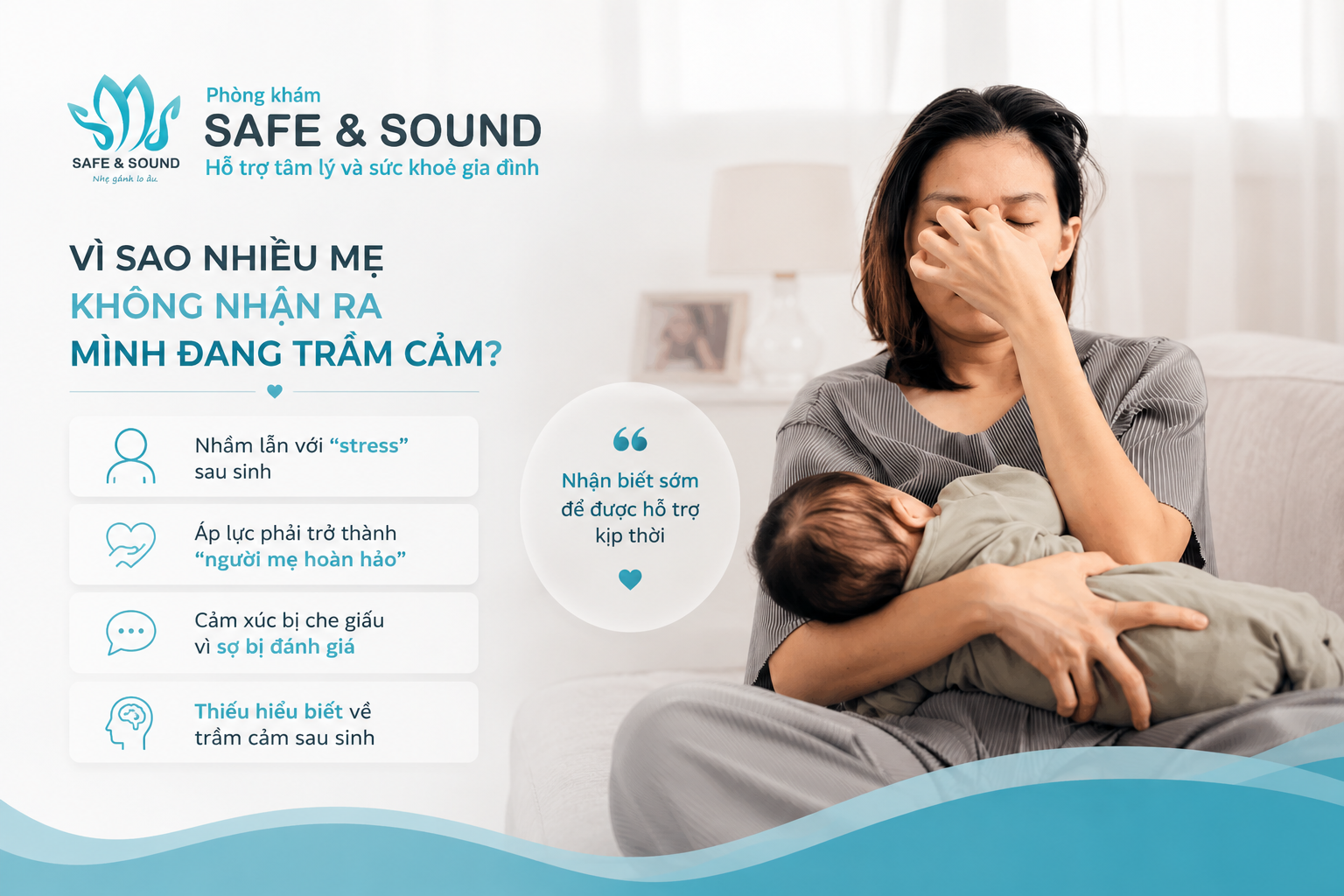
The pressure to "be happy" masks the symptoms.
Childbirth is often viewed by society as one of the happiest moments in a woman's life. This expectation, though unspoken, creates an invisible pressure that causes many mothers to suppress their emotions.
When they feel sad, they think, "I should be grateful for having a healthy child." When they feel exhausted, they think, "Anyone with a young child gets tired." When they feel disconnected from their child, they fear that speaking out will make them seem like bad mothers. In this way, they rationalize their emotions, suppress them, and continue to suffer in silence.
This not only delays seeking support but also exacerbates feelings of loneliness and self-blame.
What did the relatives see that the mother didn't realize herself?

Sometimes it's the people involved who find it hardest to notice. Family members, especially those living with the mother, may notice changes that she herself has long considered "normal."
Things family members might observe include the mother becoming more prone to crying or, conversely, becoming very withdrawn and refusing conversations more than before; saying things like "I don't know how much longer I can be okay" or "Maybe my child would be better off with a different mother"; neglecting self-care despite caring for the child; or constantly questioning whether she's doing things right even when she's actually doing them very well.
If you recognize these things in a loved one, what the mother needs at that moment is not advice or solutions but to be listened to without judgment and to be genuinely asked, "Are you really okay?"
Can prolonged postpartum depression resolve on its own?
This is a question many mothers silently ask themselves but rarely voice. The answer depends on the severity and circumstances of each individual, but one thing needs to be stated frankly: postpartum depression doesn't always resolve on its own if you just wait.
Some mild cases may improve with better family support, more sleep, or positive changes in circumstances. However, for many, if not properly identified and supported, this condition can last for months, even years, and increasingly impact their quality of life and relationships with their children, partners, and themselves.
Untreated postpartum depression can also affect a child's emotional development, as young children are very sensitive to the mental state of their primary caregiver. This is not something to blame the mother for, but rather a reason to understand that caring for the mother's mental health is caring for the whole family.
When should you seek help from a mental health professional?
Don't wait until things get really bad to seek help. If you notice any of the following lasting longer than two weeks, it's time to get a professional evaluation:
Feelings of sadness, emptiness, or emotional numbness that don't improve over time. Loss of interest in most things in life, including things you once enjoyed. Excessive and uncontrollable anxiety, especially about your child's health or safety. Thoughts of not wanting to continue or feeling that you and your child would be better off without you. A feeling of disconnection from your child even weeks or months after birth.
Seeking professional help doesn't mean you've failed or aren't strong enough. It's the bravest and most responsible step a mother can take for both herself and her child.
>> See also: Postpartum care: How to cope with postpartum depression
Conclude
Postpartum depression doesn't just have one facet. It can appear in the first few days after childbirth with acute emotions, gradually creep in during the first month with accumulating fatigue, or silently persist for six months with subtle signs that many people easily overlook.
The important thing isn't self-diagnosis, but listen to what's going on inside you and be ready to seek support when needed. Feeling unwell doesn't mean you're doing something wrong. Sometimes it's simply a sign that you need more care, not just as a mother, but as a person.
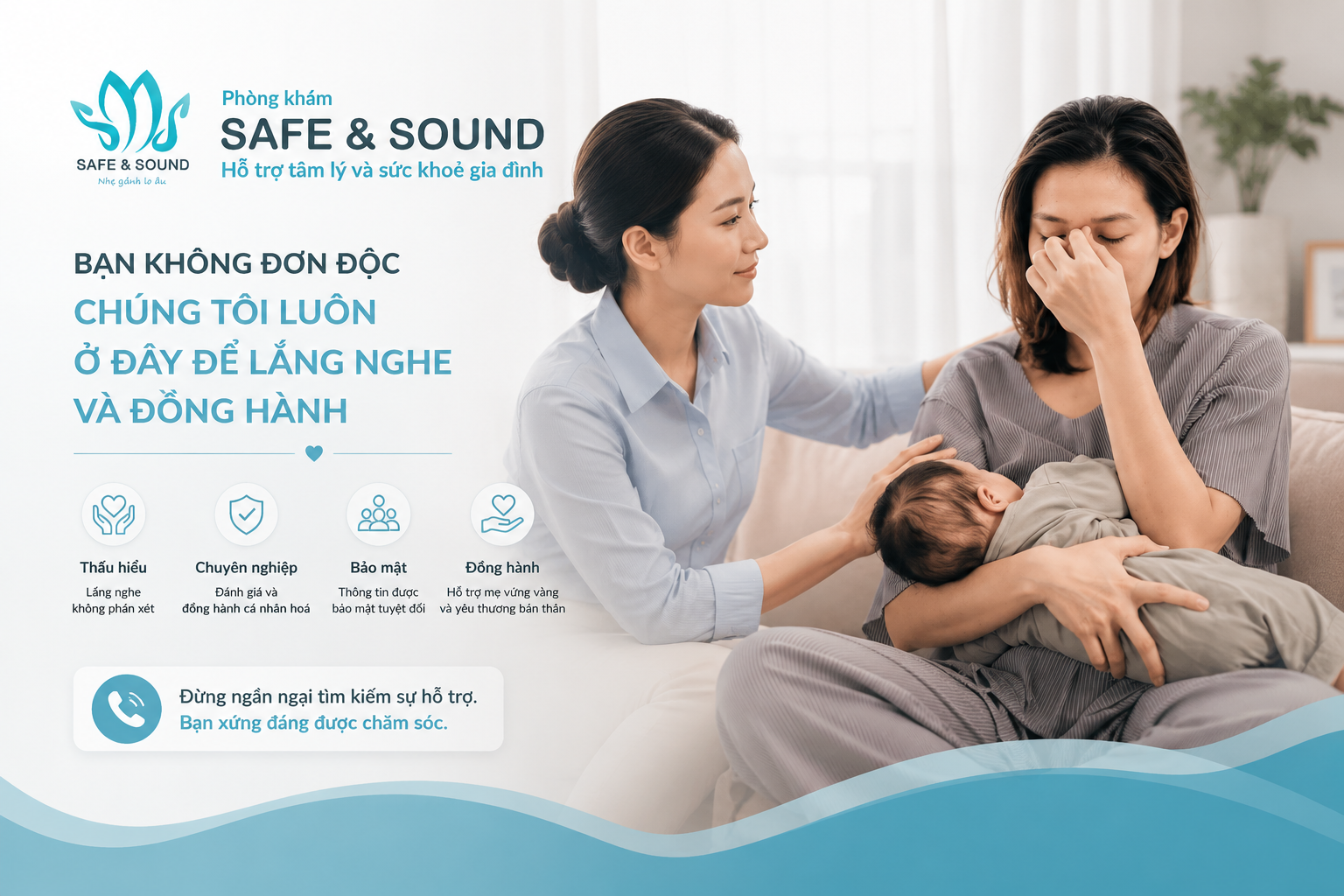
At SNS (Safe & Sound Clinic) every mother is listened to with respect and without judgment. If you are experiencing what is mentioned in this article or simply feel unwell even if you can't quite explain why, that's reason enough to start a conversation with a professional.
